Performance Index update: The social imperative

In last week’s post, we discussed the need for merchants to fine-tune their holiday strategies now to set the stage for success during the crucial final weeks of the year. Based on new data from the MarketLive Performance Index, it appears that merchants are in a good position to generate sales growth.

Second-quarter Index data shows strong year-over-year revenue growth of more than 15%. Traffic is on the upswing, surging 8.53% compared with a year ago, and merchants took advantage of the opportunity, improving conversion by nearly 5%, abandonment by just over 3%, and the add-to-cart or engagement rate by 2.5%.

But the “1-and-out” or bounce rate continued to lag, rising for the sixth straight quarter and signaling that merchants stand to reap even greater gains if they can better match the right products with their targeted audience.

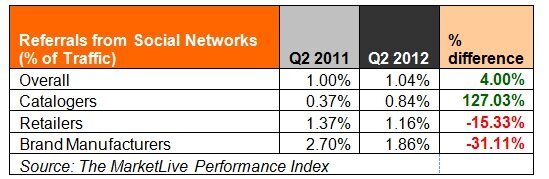
Social media data from the MarketLive Performance Index One key area of weakness continues to be social networking. The percentage of shoppers linking to eCommerce sites from social networks has stayed nearly flat from a year ago – rising to 1.04% this year compared with 1.00% in Q2 of 2011. Moreover, retailers and brand manufacturers are flagging in their efforts to drive social traffic, while catalogers – the weakest segment in this regard – are improving, but can still only attribute less than a percent of their visits to social networks. The stagnant performance suggests merchants must continue to find new ways to engage this audience, which is a potential source of not only lucrative sales but also powerful word-of-mouth clout during the holidays.
In response to the Index numbers, we suggest adding social as a holiday priority. Consider these tactics:

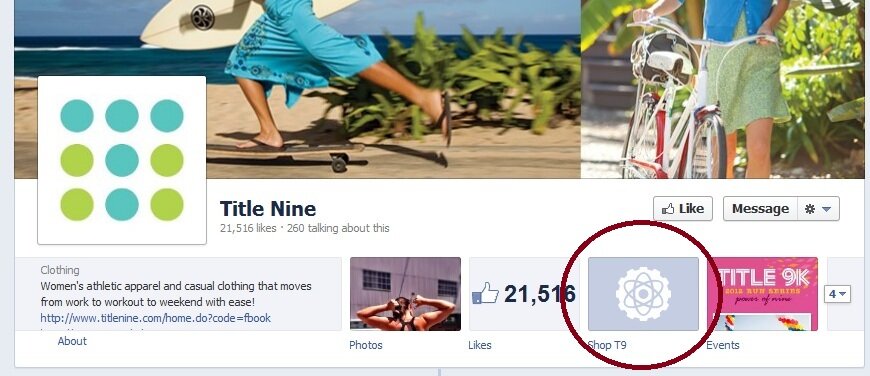
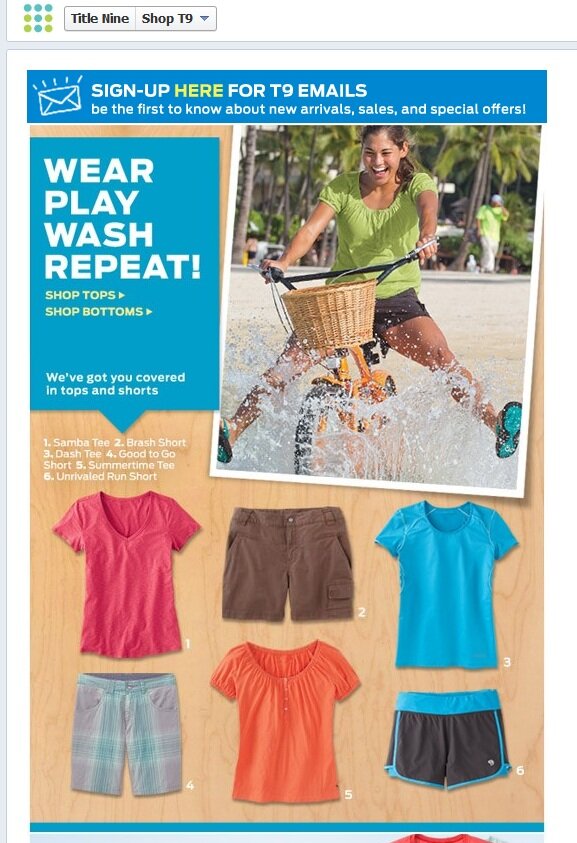
Give Facebook followers the ability to browse and buy. Unless you’ve enabled a Facebook shopping cart which allows followers to make purchases without leaving the social environment, your fan page should actively be directing traffic to products and categories on the eCommerce site. Consider creating displays targeted to the social audience that showcase the latest seasonal items, sought-after gifts and exclusive deals — and use deep links to the eCommerce site so that shoppers connect directly with the relevant content. Women’s recreational clothier Title Nine features a “Shop T9” link at the top of its page, and offers followers a selection of popular tops and shorts for summer. Shoppers who click on a product image are taken directly to the product page on the eCommerce site.

Facebook shopping example from Title Nine

Facebook shopping example from Title Nine


Develop a social discount strategy. Social followers are on the lookout for deals, so develop a plan for offering exclusive discounts that synchs with your other campaigns. The Twitter audience is especially deal-hungry; according to data from eMarketer, 48% of Twitter users who follow brands do so expressly to receive discounts.

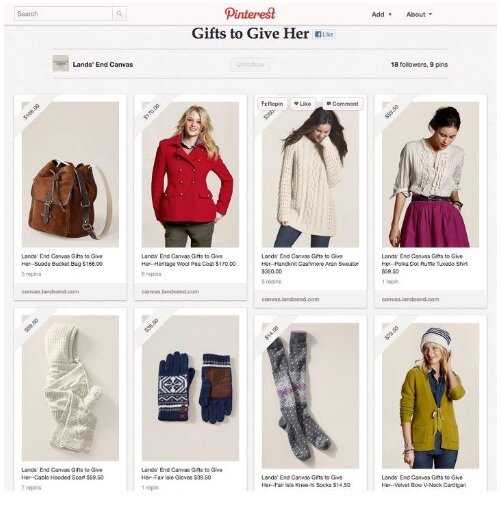
Plan a Pinterest contest. As noted in an earlier post, Pinterest is now the third-largest social network. During the holiday season, look for this image-rich site to be full of wish list pinboards; encourage shoppers to showcase your products by running a “win your wish list” or other sweepstakes contest — and cross-promote it via email and other social networks. Last year, Land’s End invited Facebook users to create Pinterest boards featuring its products, and picked 10 winners to receive  $250 gift cards.
Pinterest example from Lands End

Download the full Index report to view more holiday tips plus data by industry and business type. Meantime, what social strategies are you planning for the holiday season?

Performance Index update: 2012 is off to a strong start

he latest MarketLive Performance Index numbers have been released, and the news is heartening. Although impossible to top stellar fourth-quarter results, the first three months of 2012 saw merchants holding their own and building on the momentum from a stellar holiday season.

In fact, so far, the data show merchants ahead of the curve when it comes to forecasted online sales growth for the year. Industry researcher Forrester predicts U.S. online revenues will top $226 billion in 2012, a 12% projected increase over 2011’s total, while research firm eMarketer forecasts that year-over-year growth will top 15%. But Performance Index data shows that for the first quarter, merchants achieved a whopping 19.95% year-over-year revenue gain — suggesting that 2012 is off to a bright start indeed.

MarketLive Performace Index data for Q1 2012

Merchants achieved that revenue increase despite seeing site traffic rise just over 4%. Both the conversion and engagement (add-to-cart) rates grew by more than 12% — signaling that merchants are making the most of modest audience growth by successfully targeting potential and return customers with relevant products and offers.

The “1-and-out” or bounce rate, however, also increased — for the ninth straight quarter. Well over a third of visitors now leave sites after viewing just one page. Merchants who combat this trend stand to reap even greater sales gains, while those who fail to hone their strategies further may well  find themselves falling behind the curve.

To engage shoppers beyond the first click, merchants must hone their acquisition strategies and create a relevant shopping experience wherever shoppers roam — from the eCommerce site to the mobile environment to social outposts and beyond. It’s a challenging task, but one merchants can achieve by optimizing their businesses to create a cohesive brand identity.

With so much at stake, business optimization is our top priority for the year. To read more about it, download

How did your first quarter go? Based on the results, what strategies will you undertake to maximize sales for the remainder of the year?

Webinar recap: New analytics for a new world of commerce

We hope you caught Thursday’s presentation on optimizing analytics for connected commerce; it was an eye-opening look at how to capture and quantify the ever-more-complex interactions between consumers and brands. If you missed it, you can still visit MarketLive’s site for a replay download and whitepaper. A couple of the webinar’s key takeaways:

Web analytics reporting is just the beginning. With shoppers now roaming among eCommerce Web sites, mobile applications and social networks in their quest for products and brands to follow, merchants must compose a holistic view of consumer behavior — and that means moving beyond the Web analytics package to collect as much data as possible from wherever shoppers roam. In addition to email campaign metrics and paid search and banner tracking, merchants should take into account data from sources as diverse as:

  • Customer support logs
  • Loyalty card activity
  • Point-of-sale data
  • Social networks

Using common markers such as an email address can help connect the pieces of data to create a complete customer record that takes into account all their activities across touchpoints. MarketLive’s Kristi Burton noted that merchants should allay consumers’ privacy concerns about sharing data by stressing the benefits. For example, a point-of-sale cashier in a bricks-and-mortar store who requests an email address can explain that it will be used to help deliver better offers and product selection in the future, even if the shopper doesn’t elect to receive email alerts.

To use all that data, ask the right questions. Guest speaker Matt Hertig of Alight Analytics put it this way: Web reporting packages easily tell merchants “What happened?” — how many visitors clicked links and made purchases, which products garnered the most revenues, what pages had the highest “bounce” rates. But to gain sophisticated insight into consumer behavior, it’s key to move beyond these metrics to ask “Why did these actions occur?” and “What should I do next?”

Hertig demonstrated how dashboards tying together data from multiple sources, and segmented to focus on particular audiences, can answer those questions more precisely than eCommerce Web site analytics alone. For example, when MarketLive merchant Beauty Brands filtered traffic and revenue data to focus on mobile traffic and then segmented  further by specific device, the metrics revealed that although iPad users accounted for less than 16% of mobile visits, they drove more than 60% of mobile revenue — suggesting that the answer to the question “What should I do next?” for Beauty Brands should include campaigns and messaging targeted toward tablet users.

Analytics example from Alight Analytics

Find new ways to define “conversion”, especially for social. With consumers’ path to purchase becoming ever more circuitous, it’s key for merchants to track completion of intermediary goals along the route. Actions such as signing up for email updates or setting up wish lists represent a stepped-up level of engagement with a brand that merchants should track.

Specifically for social media, Hertig recommended defining goals that focus on driving brand awareness and engagement. He demonstrated a correlation between social interactions and site visits, which in turn drove revenues — showing that investment in creating social media buzz was indeed a worthy endeavor, creating a favorable first impression of the brand that led to increased sales.

The analytics Webinar was first in a series on optimizing your business in 2012 — watch for the next installment in May. Meantime, how are you using analytics to track customer behavior across touchpoints?

Webinar Preview: Optimize Your Business – Starting With Analytics

Now is about the time when pundits and analysts release their annual trendspotting reports, naming the technologies and tactics that merchants should adopt in the year ahead. For 2012, we at MarketLive are focusing on a seemingly simple proposition: business optimization —  that is, fine-tuning your business to create a unified brand presence across customer touchpoints.

Why this focus on optimization, rather than the latest cutting-edge tactics? The answer lies with the customer experience. In the rush to keep up with technology, merchants are establishing more brand touchpoints than ever – but too often these efforts are generic and disconnected, delivering an experience that fails to take into account individual consumer behavior.

But cohesion is exactly what merchants need to deliver. It’s no longer enough simply to have a mobile site or a brand outpost on the newest social network; the effort must be integrated with the overall brand identity and deliver a relevant experience.  After all, nowadays, a shopper might begin her quest for a product on a search engine, conduct research on a brand’s eCommerce site, consult customer service help via Twitter combined with email, complete the purchase on a mobile device, share feedback in a product review using Facebook Connect, sign up for email alerts and then make a second purchase in a bricks-and-mortar outlet after receiving a targeted promotional message. The brand experience is made up of a complex constellation of interactions, as illustrated by industry researcher Forrester’s graphic.

Depiction of ecommerce purchase pattern from Forrester Research

Brand cohesion is so important that we believe it deserves an in-depth look. So in the year to come, we’ll release a series of strategic recommendations for optimizing your brand in key areas, from mobile sites to customer service.

First up: Analytics, an area where the optimization challenge is especially acute. With a persistently precarious economy keeping budgets tight, it’s never been more important to be able to measure and quantify the effectiveness of initiatives. At the same time, tracking the behavior of consumers as they move among channels and platforms poses its own challenges. The eCommerce site analytics package is now just the starting point. Merchants must incorporate data from additional sources to create a complete picture of consumer behavior, and view that data through the lens of multiple filters and segments to gain a nuanced view of how shoppers interact with their brand.

To learn more, join our Webinar tomorrow, Thursday, March 22, at 10 a.m. PDT. MarketLive partner Alight Analytics will share examples of merchants who’ve optimized their analytics for sales success — and we’ll reveal the steps you can take to capture how consumers interact with your brand in 2012.

Holiday wrapup: MarketLive Performance Index shows strong gains

The final holiday numbers are in — and there’s much reason for merchants to rejoice. The latest numbers from online measurement firm comScore show a 14% revenue increase for Q4 2011, with sales totaling $49.7 billion.

Data from the MarketLive Performance IndexAnd, once again, it appears that the wealth wasn’t limited to major national brands and mass merchants. Year-over-year data from merchants listed in the MarketLive Performance Index in both 2010 and 2011 shows revenue gains of 20% for the fourth quarter — signaling that mid-market merchants thrived despite heavy competition and tight marketing budgets.

The “1-and-out” rate — the percentage of visits ending after viewing a single page — jumped significantly, signaling that more shoppers than ever clicked away from sites immediately if they didn’t spot the products or deals they sought. The increased “1-and-out” rate offset the overall traffic growth of 12.18% — which means that merchants’ efforts to connect shoppers with relevant offers was even more effective than the numbers suggest for those shoppers who stayed on-site.

Meantime, key performance indicators held steady year over year, with conversion, abandonment and engagement — the “add to cart” rate — all improving slightly. The data suggests merchants held their own in a challenging sales environment, and demonstrates that focused, targeted offers to likely buyers paid off in increased sales.

Closing the “1-and-out” gap
The growth of the “1-and-out” rate continues a trend we spotted in the second quarter of 2011, when MarketLive Performance Index showed continued growth in the percentage of flighty eCommerce site visitors who departed after a single page. To combat the trend, relevance — matching the right products and offers with the right shoppers — should be a priority for 2012.

Consider the following techniques, as outlined in Volume 15 of the Index:

  • Reduce the “1-and-out” rate beyond the home page. With SEO and paid search employing more deep links into eCommerce sites than ever, merchants must maximize the effectiveness of interior pages.
  • Capture the revenue potential of internal search. Despite the explosion of flashy new merchandising techniques and eCommerce shopping experiences, this tool remains a mainstay for driving eCommerce purchases – and merchants must optimize it more precisely than ever to deliver relevant results quickly.

Read the report for more data and examples — and watch for a new 2012 trends report coming soon with further strategies for the year ahead.

3 tips for meaningful measurement of social activitiy

With the holiday season in full swing, many merchants are using social outposts to post promotions, attract followers and encourage them to buy.. But what messages are getting through, and how can merchants measure the overall impact of social media on their business?

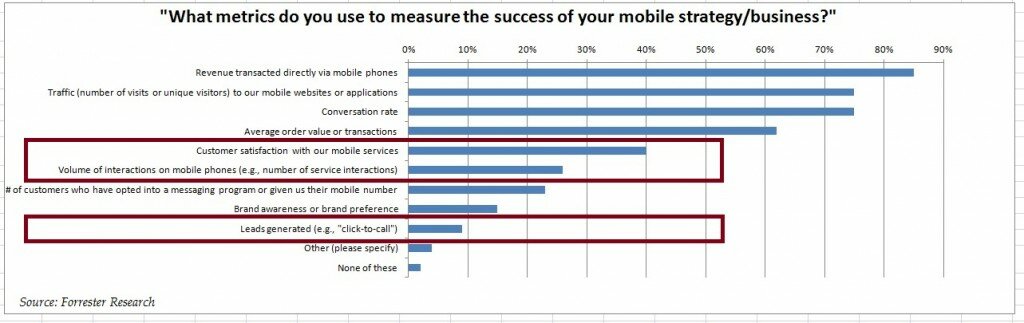
It’s a tricky proposition, because for many merchants, the goals of social media are abstract — which can translate to “unmeasurable.” For example, industry researcher Forrester found that most merchants consider social media to be highly experimental, and a better tool for listening than selling. Nearly 60% of merchants agreed with the statement “The returns on social marketing strategies are unclear,” while less than a third — 31% — reported using a specific set of metrics to measure the effectiveness of social networking activities.

Chart on social media's utility from Forrester ResearchOn the one hand, it’s admirable that merchants are willing to invest in social networks despite the lack of concrete return on investment. Such willingness signals a recognition that building a lasting customer relationship requires forging sometimes-intangible ties between shoppers and brands.

At the same time, to prove value over the long term, merchants need to find ways to capture, define and quantify the interactions that take place on social networks. Once the novelty factor wears off, only by consistently measuring effectiveness can merchants expect to continue justifying investment in social media. So, how to go about doing it? A few thoughts to get you started:

  • View followers and traffic as the top of the funnel. The number of page “likes” on Facebook or followers on Twitter is worth tracking for growth over time, as is the overall viewership of pages and profiles — but as with visits on an eCommerce site, these baseline metrics can’t tell you much on their own about the impact of your social media efforts. After all, a sweepstakes contest or controversial tweet can cause a momentary attention spike, but if the goal is building lasting relationships with your brand, then these kinds of stunts are a waste of effort.
  • Find ways to measure participation. In his post titled “Best Social Media Metrics”, analytics guru Avinash Kaushik proposes several ways to measure not just the quantity of followers, but also the rate of interactions and activities on social media sites. He identifies three participation concepts to quantify:
    • “Conversations” – the number of comments on posts on Facebook, Google+ or blogs; the number of replies to Twitter tweets
    • “Amplification” – the number of shares, retweets or linkbacks
    • “Applause” – the number of Facebook “likes”, Google+ “+1s” or Twitter “favorite clicks”


Social media data spreadsheet from Kaushik,net

http://www.kaushik.net/avinash/best-social-media-metrics-conversation-amplification-applause-economic-value/

(One of Kaushik’s readers was so inspired by the post that he made a spreadsheet for tracking this data, shown partially in the screen shot above; it’s downloadable from Kaushik’s blog)

Kaushik notes that currently, there’s no way to gather this information except manually – but the payoff is potentially huge. First, merchants who measure participation can more easily demonstrate that social networks are achieving intangible goals such as “listening to and better understanding our customers.” Merchants can also better gauge which social media campaigns actually resonate with customers — and which posts pass along the social transom without achieving anything in the way of word-of-mouth marketing or engagement.

  • Define “conversion” differently. Analytics programs can easily track traffic to eCommerce sites from social networks, and from there can calculate the purchase conversion rates and revenue generated by those visitors. But with less than 3 percent ofvisits to eCommerce sites coming directly from social networks, according to the latest MarketLive Performance Index, the numbers are likely to be insignificant compared to other customer acquisition methods. Perhaps for that reason, Forrester’s report found that just 7 percent of merchants listed social media as among their top three most effective acquisition sources.But the typical path to purchase now criss-crosses multiple touchpoints before shoppers become buyers, as depicted by the Forrester graph below.

Chart from Forrester Research showing shopper touchpoints

For that reason, it’s critical to measure social media efforts in relation to crucial milestones other than purchases. Those milestones could include:

    • Signups for mobile alerts or email updates
    • Posting customer reviews on the main eCommerce site
    • Attendance at in-store events promoted on social media sites

In sum, it’s high time to expand beyond rudimentary metrics when it comes to social media — and the holiday season, when activity is at a peak, is a good time to try new techniques. By employing new data points and expanding the range of social media conversion goals, merchants can capture a more accurate picture of the effectiveness of their campaigns — and thereby devise measurable tactics for future success.

What are you doing to measure social media effectiveness this holiday season? What data points are most useful to you?

Holiday Countdown Tip #3: Analytics to act on now – on-site search logs

While data and results from the holidays are still weeks away from complete, there is valuable analytics information to be gleaned — and acted on — right now: your on-site search logs.

Making small changes to enable more efficient searching during the holidays can have a potentially large impact. Data from the MarketLive Performance Index shows that fully one-third of all eCommerce site visits include an internal search — and those shoppers who use internal search tend to make purchases at a significantly higher rate than other visitors. According to the index, the conversion rate for on-site search was 7.09% for the second quarter of 2011, nearly 39% higher than the overall average conversion rate.

To improve the efficiency of search, look out for:

  • “Zero results” terms. Add verbiage to product copy to produce a match, or offer alternatives or a redirect to help shoppers connect with the right products; tweak your search tool to correct for misspellings and typos.
  • Most-frequently-used terms. Ensure that the most frequently-searched terms give shoppers enough results by adjusting product copy. If your search functionality allows it, automatically suggest categories to browse in addition to offering a results set of individual items.
  • Holiday concepts. Find a way to connect shoppers with relevant products even if they search for abstract concepts like “holiday sale” or “gifts for her.” Toys R Us redirects searches for “stocking stuffers” to the category of gifts under $10 — a quick solution that avoids having to adjust copy for thousands of items, but gives shoppers plenty of options likely to suit their needs.

Example of search redirect from Toys R Us

 
To view all the tips in this series, visit the Holiday Tips section of the MarketLive blog:
http://www.marketlive-blog.com/tag/2011-holiday-countdown-tips/

And be sure to subscribe to marketlive-blog.com for year-round best practices, trend-watching, performance data and more.

Forced account creation: a trend to ignore (for most)

More and more merchants are employing forced account registration – that is, forcing account creation before shoppers complete their first online purchase. Merchants force account creation in the belief that they can capture more shopper data that way – especially an email address – even if a purchase is ultimately abandoned. But for most merchants, the opposite may, in fact, be true.

The trend is certainly real. We surveyed 100 retailers from the Internet Retailer 500 – the 50 top-ranked merchants earning more than $25 million in annual online revenue, and the 50 top-ranked merchants with online sales under $25 million – and discovered that overall, 1 in 4 of these merchants use forced account creation.

Data on usage of forced registration vs. guest checkout from MarketLive

But there’s a marked discrepancy between large and small sites, with the big players using forced account creation almost a third of the time – 77% more often than the specialty and niche merchants. After all, larger brands not only attract larger audiences, but they can offer deeper discounts due to economies of scale – giving shoppers a powerful price incentive to endure the account creation process.

We also noticed similarities in the type of products and services on offer among merchants deploying forced registration. Broadly, they fit into one of the following classifications:

  • They’re large, multi-category merchants. As stated above, mega-players like Amazon.com, Overstock.com and Drugstore.com have the clout to force account creation – they offer consumers the convenience of one-stop shopping and the lure of wide discounts as payoff for setting up an account.
  • They offer goods and services consumers replenish more than once a month. For constant users of grocery or diet meal delivery and movie rental services, account registration can actually be a time-saver – they need only enter payment and shipping information once.
  • They offer B2B goods and services. For merchants selling to other companies with the need to place recurring or standing orders, forced account registration can similarly be a convenience rather than a hassle – allowing customers to easily access order histories and manage billing.
  • They’re membership organizations with incentives to join. From Costco, which offers members steep discounts for buying in bulk, to the Gilt Groupe, whose members receive exclusive promotions on sought-after luxury goods and local services, registration is tied to receiving significant benefits unavailable to the general public.
  • They message incentives for account registration clearly. Regardless of the business type, merchants successfully employing forced Forced account registration example from ID Wholesalerregistration spell out the reasons shoppers should sign up. At right, IDWholesaler calls attention to the convenience factor for its B2B audience, citing easy order tracking and reorder options as well as price discounts.

If your business doesn’t fit into one of the above categories, we still recommend giving shoppers the option to check out as a guest – the risk is too high that forcing account creation will alienate potential customers.  Forced account registration is a significant cause of purchase abandonment, contributing to 14% of incomplete purchases, according to industry researcher Forrester.

A large usability study recently reported in Smashing Magazine found that forced account creation was an even bigger barrier to purchase: one in three shoppers abandoned purchases when forced to register, the study found. Test subjects gave two primary reasons for their reluctance:

  • Inconvenience. Consumers already juggling multiple logins at home and work are unlikely to create another username and password if the product can be found elsewhere without registering.
  • Mistrust.Registration degrades customer trust – broadcasting the intent to store shopper’s personally identifiable information, while creating the expectation of future marketing harassment. The researcher reported, “40% of test subjects expected to be spammed with marketing material, even if they explicitly declined to sign up for a newsletter during the checkout process. …  ‘If I create an account, they can send me spam from now on and forever.’”

Since guest checkout is such a boon to shoppers, merchants should not only offer it,  but they should call attention to it at the beginning of the checkout –  as 1-800-Flowers does, letting shoppers know they can set up an account later if they so choose. Those opting to sign in can use their Facebook login, boosting the convenience factor of account creation.

1-800-Flowers guest checkout example

L.L. Bean similarly offers guest registration while enumerating the benefits of account creation – putting an emphasis on convenience with the promise of “faster checkouts, order history and more.”

L.L. Bean guest checkout example

Collect email addresses in the very first checkout step; if shoppers abandon purchases later, merchants can still contact them for follow-up, even without forced account creation. To build trust, clearly state the reason for collecting that email address  — to communicate about the shopper’s order — as Barnes & Noble does below. Make signing up for additional updates and offers an optional extra.

Email requirement in checkout from Barnes and Noble

MarketLive Performance Index: A First Look at Q3 Data

 Third-quarter data from the MarketLive Performance Index is hot off the presses! From July 1 to September 30, Index merchants saw a more than 15% gain in visitors and revenue growth of over 18%, with conversion also inching upward by 5.24%, to 4.66%.

3rd quarter 2011 data overview from the MarketLive Performance Index

The data also highlights a potential challenge for merchants – engaging shoppers beyond the first page of the site. Year-over-year data for the third quarter shows a marked increase in the “1-and-out” rate, which measures the percentage of visits ending after just one page. The “1-and-out” rate increased by nearly 15% in the third quarter, suggesting that increased traffic is also bringing more visitors who aren’t immediately connecting with products or offers that meet their needs.

The “1-and-out” growth is a continuing trend. Earlier in the year, our second-quarter report for 2011 similarly found the “1-and-out” rate had jumped, albeit by a smaller percentage. Merchants have a significant incentive to better serve those visitors – if they can be persuaded past the first page of the site, they’ll potentially go on to purchase, driving even larger gains in engagement, conversion and sales.

The need to offer compelling products and offers is especially acute heading into the holiday season, when visitors are likely to research and shop heavily online.

With continuing economic uncertainty fueling a conservative outlook, shoppers nonetheless report they plan to maintain holiday spending at levels on a par with last year. According to new data from the MarketLive/e-Tailing Group Holiday Shopping Survey , a majority of shoppers – 56% – report they’ll spend the same amount as they did last year, with 7% saying they’ll spend more and 37% predicting they’ll spend less. Regardless of their budgets, consumers will use the Web to hunt for deals, with 61% of shoppers saying they intend to research products online before making offline purchases, according to the survey.

This conservative, but hardly catastrophic, consumer outlook should be cause for merchants to take heart. The challenge will be to find ways throughout the holiday season to engage shoppers, beyond simply slashing prices. For key tactics to try, be sure to download the MarketLive Performance Index Vol. 16 report, which will be available at marketlive.com Oct. 13.

And for more holiday best practices, be sure to sign up for MarketLive’s 2011 Consumer Shopping Survey and Holiday Strategies Webinar, presenting original research produced in conjunction with the e-Tailing Group. Register for the October 26 Webinar now.

Meantime, how do your Q3 numbers stack up? What are you doing to engage visitors beyond the first page?

Switch to our mobile site

WordPress SEO fine-tune by Meta SEO Pack from Poradnik Webmastera